
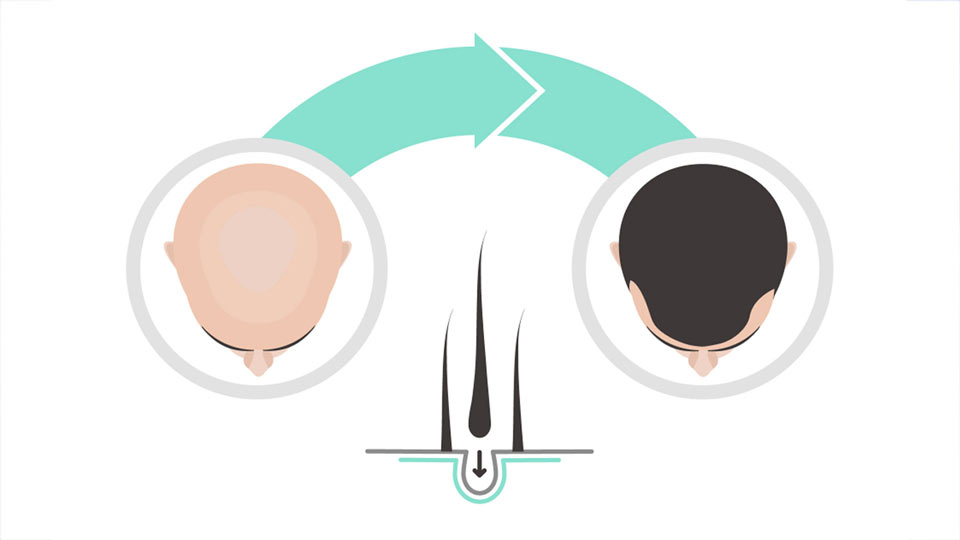
A hair transplant is a meticulous procedure that must be carried out stage by stage. A well-planned hair transplant is much more likely to deliver the desired results, which is why every hair transplant at our clinic progresses step by step. Here we share, step by step, what you can expect when you have a hair transplant at our clinic.
Preparation Stage
You may have decided on a hair transplant to overcome hair loss and feel more confident. When you come to our clinic, the causes of your hair loss are investigated first. We also assess which procedures could be applied and whether you are a suitable candidate for a hair transplant. In this way, your suitability is confirmed and we can take the right steps towards a successful result.
Hair Analysis
After investigating the causes of your hair loss, we assess how strong your hair is. This gives us all the information we need about your type of hair loss, and once your hair has been analysed, we can determine which stage of hair loss you are at.
Keep in mind that the examinations carried out by the specialist play a key role in the final decision. Answering all questions about your hair health accurately therefore has a direct impact on the success of your hair transplant.
Blood Tests
Moving straight to the procedure without proper checks could lead to risky results. That is why blood tests are carried out to detect any health problems you may not be aware of. The tests screen for infectious diseases such as HIV, hepatitis B and hepatitis C.
Chronic conditions such as diabetes and high blood pressure that could interfere with the process are also assessed. Once the results are clear and we are confident the procedure can go ahead smoothly, we move on to planning.
Planning Stage
High-quality planning is the most important factor in a successful hair transplant, which is why planning is considered the most valuable stage. Based on the initial assessments, we determine how you will achieve your new look.
During planning, you are given general information about the number of grafts to be harvested, the technique to be used and the process as a whole. You are then asked to give your consent to the process. Planning ends with you and your specialist reaching a shared agreement. If any details remain unclear, the process cannot be expected to go smoothly — so clarifying every detail is the most valuable part of the planning stage.
The Hair Transplant Procedure
When it comes to the procedure itself, it is very important that both the patient and the doctor stick to the plan. This makes achieving the desired result much easier. In line with the plan, the procedure continues with anaesthesia, harvesting the follicles, opening the channels and implanting the grafts.
Anaesthesia
Depending on the patient’s condition and the doctor’s decision, general or local anaesthesia is used. Local anaesthesia is generally preferred for healthier results. Once the anaesthesia is applied, the procedure begins. Because only the area is numbed, you can occupy yourself with other things during the procedure, and you will feel almost no pain.
Graft Harvesting
The hair follicles taken from your donor area are called grafts. Harvesting the grafts is considered the first step of the transplant. Different methods are used depending on the technique applied. Over a period that varies with the technique, the harvested follicles are prepared for implantation in the next stage.
Opening the Channels
Once the follicles have been harvested, the plan is reviewed with you again based on the total number of grafts, and the recipient area is finalised. Local anaesthesia is applied again for this stage. When the channels have been opened, there is a short break before implantation begins.
Implanting the Grafts
The carefully harvested grafts are implanted into the thinning area with the same precision, so this stage must be carried out very carefully. To achieve the result expected in the plan, implantation can sometimes take a little longer.
Once the grafts have been implanted and the procedure is completed, the hair transplant process is finished. From this point on, your hair will heal and gradually reach its best. Because your recovery is also monitored by our specialists, an even more successful result can be achieved.
Free Consultation
Let’s plan your process together
Plan every stage of your hair transplant with our specialists — from your first consultation to your aftercare.
Leave a Reply
You must be logged in to post a comment.